

Overnight, Ukrainian drones set fire to warehouses and a logistics hub in Elektrostal, about 35 miles east of Moscow. On the Black and Azov Seas, Ukrainian forces struck thirteen more vessels of russia’s shadow fleet, bringing the total to 172 damaged or destroyed over the past two weeks.
Ukraine is no longer fighting only at the front line. It is systematically dismantling the network of warehouses, depots, ports, ships, and logistics hubs that move russian military materiel from factory to trench. And it is doing this at a scale, tempo, and depth that russia does not know how to defend against.
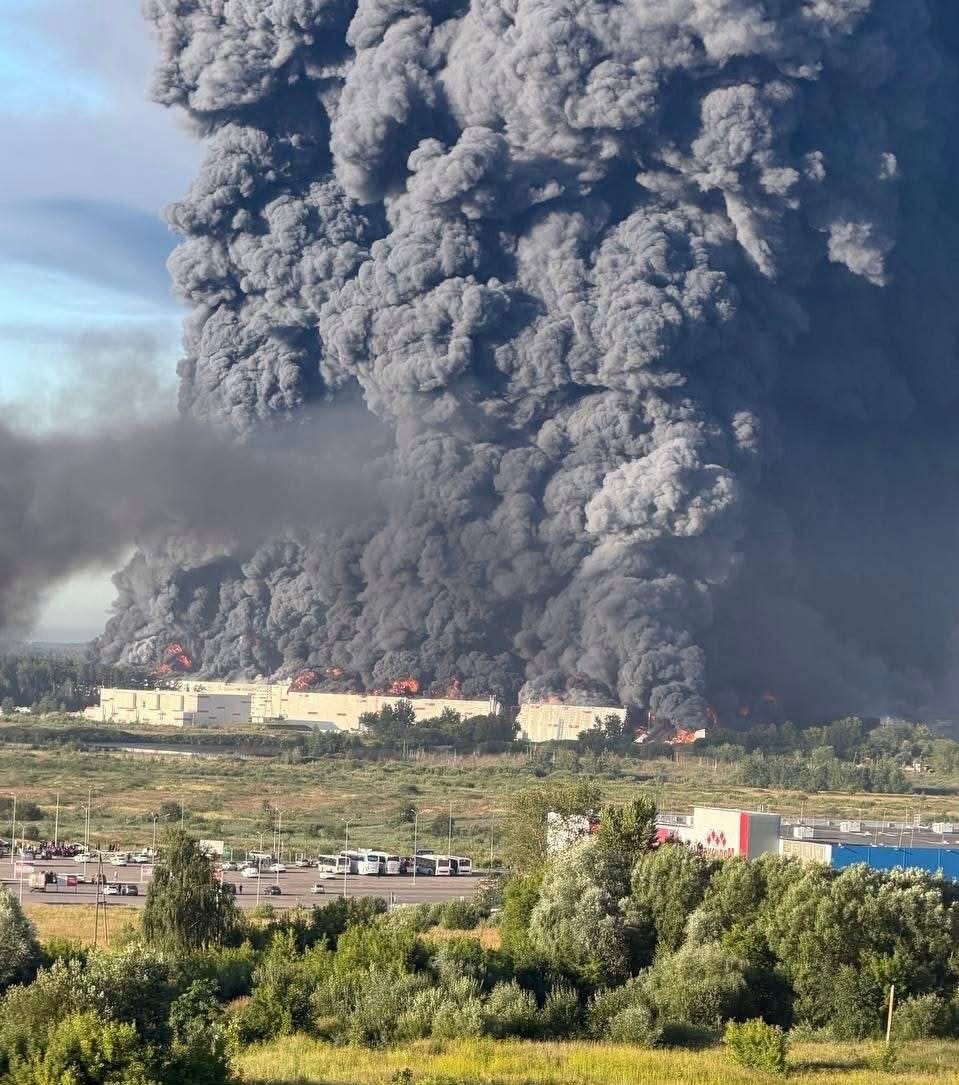
(Photo showing russian warehouses in Elektrostal)
What is actually being destroyed
Modern war is a logistics war. Weapons on the front line are useless without the continuous flow of ammunition, fuel, spare parts, food, and replacements moving toward them. That flow depends on things that cannot hide: warehouses, marshalling yards, port terminals, and depots. All of them are enormous. All of them are fixed. All of them are full of the most flammable industrial materials. And every one of them represents months of accumulated russian production sitting in one place.
When Ukraine burns a warehouse in Elektrostal, russia does not just lose a building. It loses whatever the building was storing – artillery shells, drones, missiles, fuel, food, spare parts, sometimes all of the above. That storage represents months of previous russian factory output, concentrated for onward shipment. Every warehouse hit turns previous russian production into smoke.
When Ukraine hits shadow-fleet vessels, russia does not just lose a ship. It loses one of the specific vessels moving oil, LNG, or military materiel through the covert logistics network russia has built to circumvent Western sanctions. The shadow fleet is a finite resource. It cannot be rebuilt at the pace it is being destroyed. Every ship damaged forces russia to reroute through fewer vessels operating at higher risk with higher insurance costs.
When Ukraine hits a port terminal or a marshalling yard, russia does not just lose an asset. It loses a fixed transfer point in a supply chain that has almost no substitutes. Marshalling yards are where trains from factories in central russia hand off military cargo to trains going to the front. Port terminals are where shipments from China, North Korea, and Iran enter the russian logistics network. These nodes cannot be moved. They cannot be hidden. They can only be defended or destroyed.
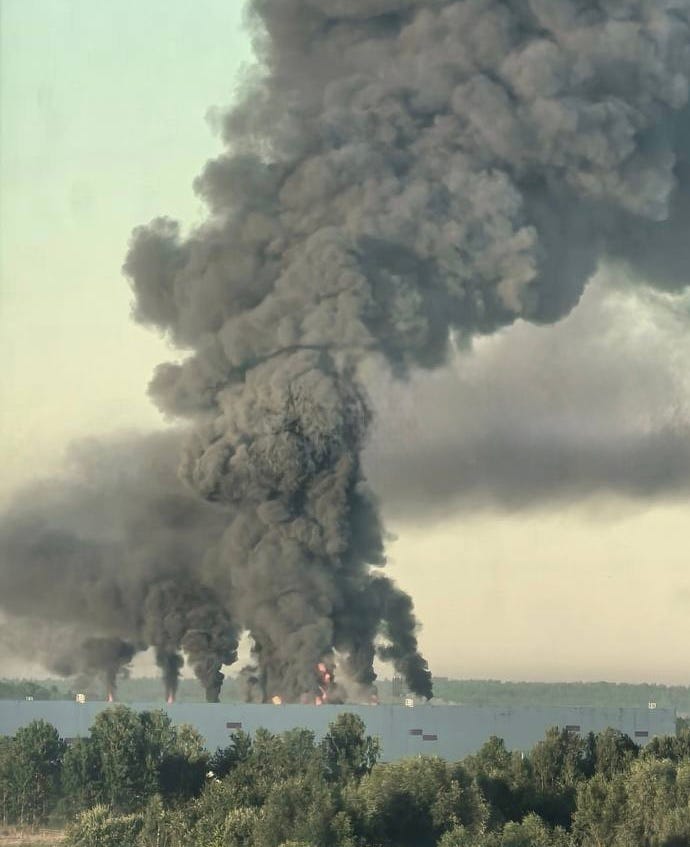
(Photo showing one of the russian ports)
Why the shift matters
For the first two and a half years of the war, russia enjoyed nearly complete sanctuary for its rear-area logistics. Ukraine could hit targets at the front. It could not reliably reach the warehouses in Toropets, the fuel depots in Bashkortostan, the port terminals in the Baltic, the marshalling yards in the Moscow region, or the shadow fleet in the Black Sea. Russia could store, ship, and stage its war effort in territory that was, for practical purposes, off limits.
That sanctuary is gone.
Ukrainian drones now reach every major logistics node in russia. The Omsk refinery strike I wrote about last week – 3,000 kilometers from Ukrainian territory – demonstrated that even Siberia is no longer safe. The shadow-fleet campaign has damaged or destroyed 172 vessels in less than two weeks. Warehouses inside the Moscow region are burning overnight.
The strategic implication is that russia’s stockpile-and-flow system is now under continuous attack. Russia can still produce ammunition. Russia can still import materiel from North Korea, Iran, and China. What russia can no longer do is safely accumulate, store, and forward that materiel through the fixed logistics network its army depends on. Every warehouse burned is months of previous production destroyed. Every marshalling yard hit forces a rerouting that costs time. Every port terminal set on fire creates a bottleneck that ripples backward through the entire supply chain, all the way to the factories that made the goods sitting in the warehouse Ukraine just burned.
Why it took four years
The obvious question is: if this is so devastating, why did it take four years?
Three limiting factors held Ukraine back until now.
First, the Biden administration’s restrictions on Ukrainian strikes into russia. I want to be careful with this point because Ukraine owes an enormous debt to American support. Without American weapons, American intelligence, and American money, it would have been much more difficult for Ukraine to hold the front line in the early stages of the russian full scale invasion. That gratitude is real and warranted. But the same administration that provided the support also imposed sustained pressure on Ukraine not to strike into russian territory with American-provided systems, and often not to strike into russian territory at all. The stated reason was escalation management. The practical effect was that russian logistics enjoyed a sanctuary they never should have had. Ukraine could kill russian soldiers at the front. Ukraine could not reliably reach the depots that supplied those soldiers with ammunition. That constraint has finally been lifted, partly through changes in American policy and partly through Ukraine’s development of long-range systems that do not require American permission to use.
Second, Ukraine needed time to build the drone capacity. Today Ukraine uses approximately 10,000 drones every day. In the past year Ukraine produced more than three million drones. The United States, for comparison, produced approximately 300,000 in the same period. Ukraine’s drone industry is now the largest in the world by a wide margin, and it has become that by iterating under fire. Fire Point FP-1, Bober, Lyutyi, Palianytsia, and other Ukrainian systems represent generations of engineering development compressed into four years of wartime necessity. The technology to reach Toropets, Kaliningrad, and Omsk did not exist in 2022. It exists now because Ukrainian engineers built it while the country was being bombed.
Third, Ukraine needed the intelligence and targeting infrastructure to see russian logistics. You cannot strike what you cannot find. In the early war, Ukraine did not have the deep-territory intelligence network required to identify high-value logistics targets, verify what specific warehouses were storing, and time strikes for maximum destruction. Building that capability – through GUR, HUR, satellite partnerships, human intelligence networks inside russia, and open-source analysis – took years. Ukraine now sees russia’s logistics network in a way it did not two years ago. It knows which warehouses matter. It knows which ships in the shadow fleet are carrying what. It knows which marshalling yards are moving what. And it strikes accordingly.
The convergence of these three factors – loosened political constraints, drone production capacity at scale, and mature targeting intelligence – is what has produced the current pattern of strikes. This did not happen because Ukraine suddenly decided to escalate. It happened because Ukraine finally has the capacity, the range, and the permission to do what it has needed to do since 2022.
What this changes
Western analysts have spent four years arguing that russia can outlast Ukraine in a war of attrition. That argument rested on the assumption that russian military logistics would continue to function at pre-war capacity while Ukrainian logistics degraded under russian pressure. Neither of these assumptions were correct.
Russian military logistics is not degrading gradually. It is being systematically dismantled at the speed of Ukrainian drones. Ammunition depots are burning. Fuel storage is offline. Shadow fleet vessels are being destroyed faster than they can be replaced. Port terminals are on fire. Marshalling yards are being retargeted for hits every few weeks. The physical infrastructure that moves russian war materiel from factory to front is under continuous, targeted, deep-territory attack, and russia does not have a defensive answer.
Every strike costs russia far more than it costs Ukraine. A Ukrainian drone costing a few thousand dollars destroys a warehouse full of ammunition worth tens of millions. A Ukrainian strike on a shadow-fleet tanker costs almost nothing and inflicts hundreds of millions of dollars in insurance, replacement, and logistical costs on the russian side. The math is devastating and it compounds every day.
Several more hits like this on russian logistics and warehouses and russian people will burn the Kremlin themselves.
This is the fastest way to stop the war. It took four years to get to this point. It took four years of political restraint, four years of iterating on drone technology, and four years of building the intelligence infrastructure required to see russia’s logistics network from the inside. All three constraints have now been overcome.
Slava Ukraini.
Everyone in Russia knows that their infrastructure necessary for life can be hit now. If Ukraine starts a campaign on heating plants like Russia did in Ukraine, they will freece this winter. But no one starts to tell to Putin that this is a problem and he should end the war.
Mobilizing the Russian people to finally address the name of their pain would be excellent, if unlikely. It seems more probable that it would be the Prigozhin march, Mark 2. Prigozhin’s men marched for hundreds of miles without any opposition from the local people, including military garrisons. If Putin falls, it will be because his enablers and toadies lose confidence in his ability or desire to guarantee a safe place for them to continue to accumulate wealth. Considering Putin’s current behavior, I imagine this group of players is highly motivated to find a way around the chaos threatening their livelihoods.